Just Keep Swimming
Available as an audio article. LISTEN HERE
Q&A with adventurer and advocate Bill Yeates.
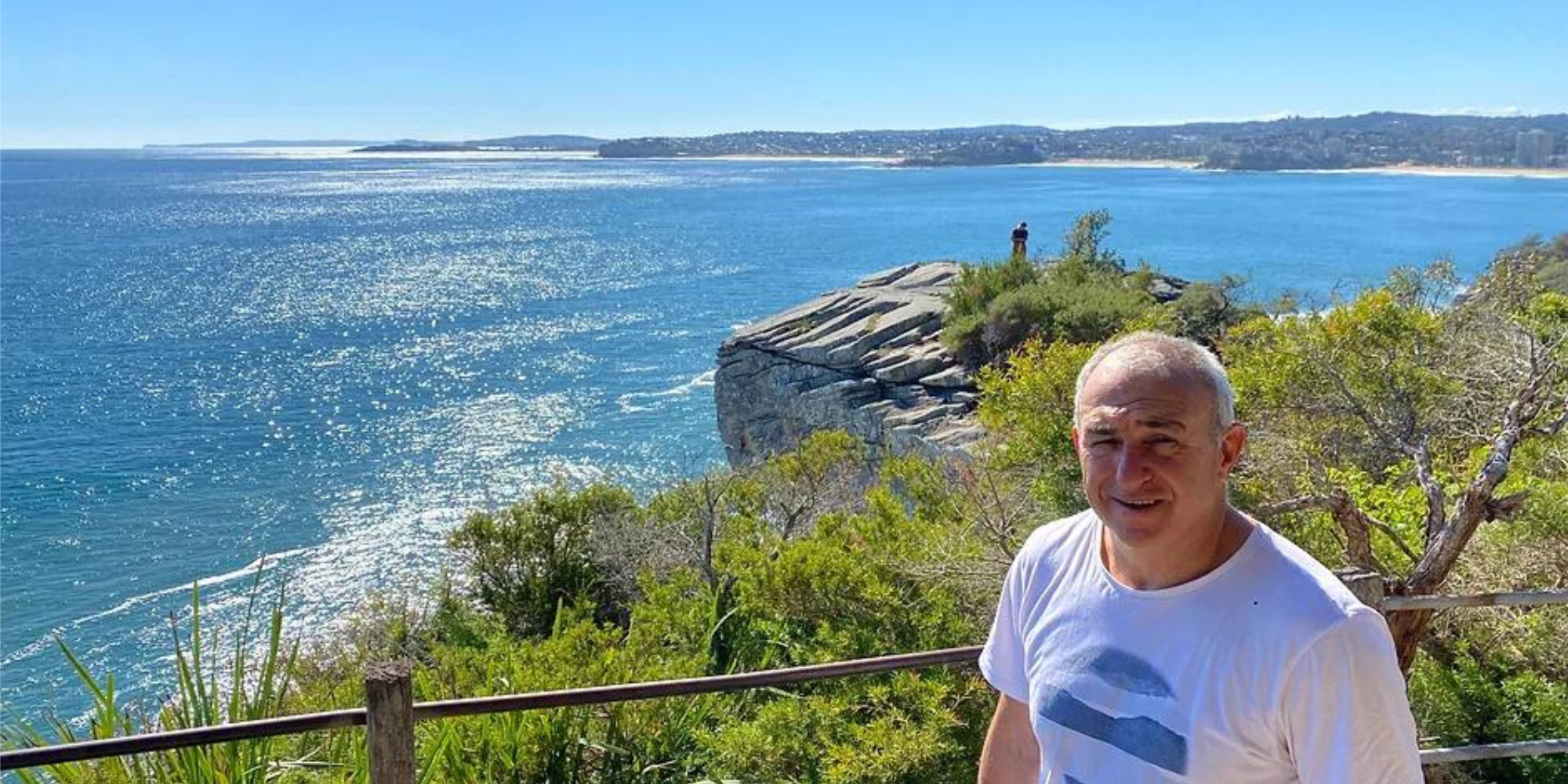
Bill Yeates taught chemistry, physics, and mathematics in Australia for 35 years, before experiencing a ‘depressive episode’ that eventually led to a diagnosis of younger onset Alzheimer’s disease in 2019 at age 59.
With the support of his wife, Nicole, their children and Peter, his twin brother, Bill has created a dynamic and engaging post-diagnosis life as a masters competitor in swimming and surf lifesaving, champion lifesaver coach, community fundraiser, and dementia advocate.
Bill informs and inspires others around the globe to create positive change for people living with dementia through presentations and media appearances. He’s also a living testament to the power of positivity and actively challenges the narrative of the dementia journey as one only of progressive decline. Forever a teacher, Bill has created a person centred, holistic approach to nourishing his body, heart, mind, and soul that helps him manage symptoms and maintain his independence.
Dementia Connections caught up with Bill just as he was leaving to present at the 2024 Alzheimer’s Disease International 36th Global Conference on Dementia in Krakow, Poland before travelling on to England and Norway.
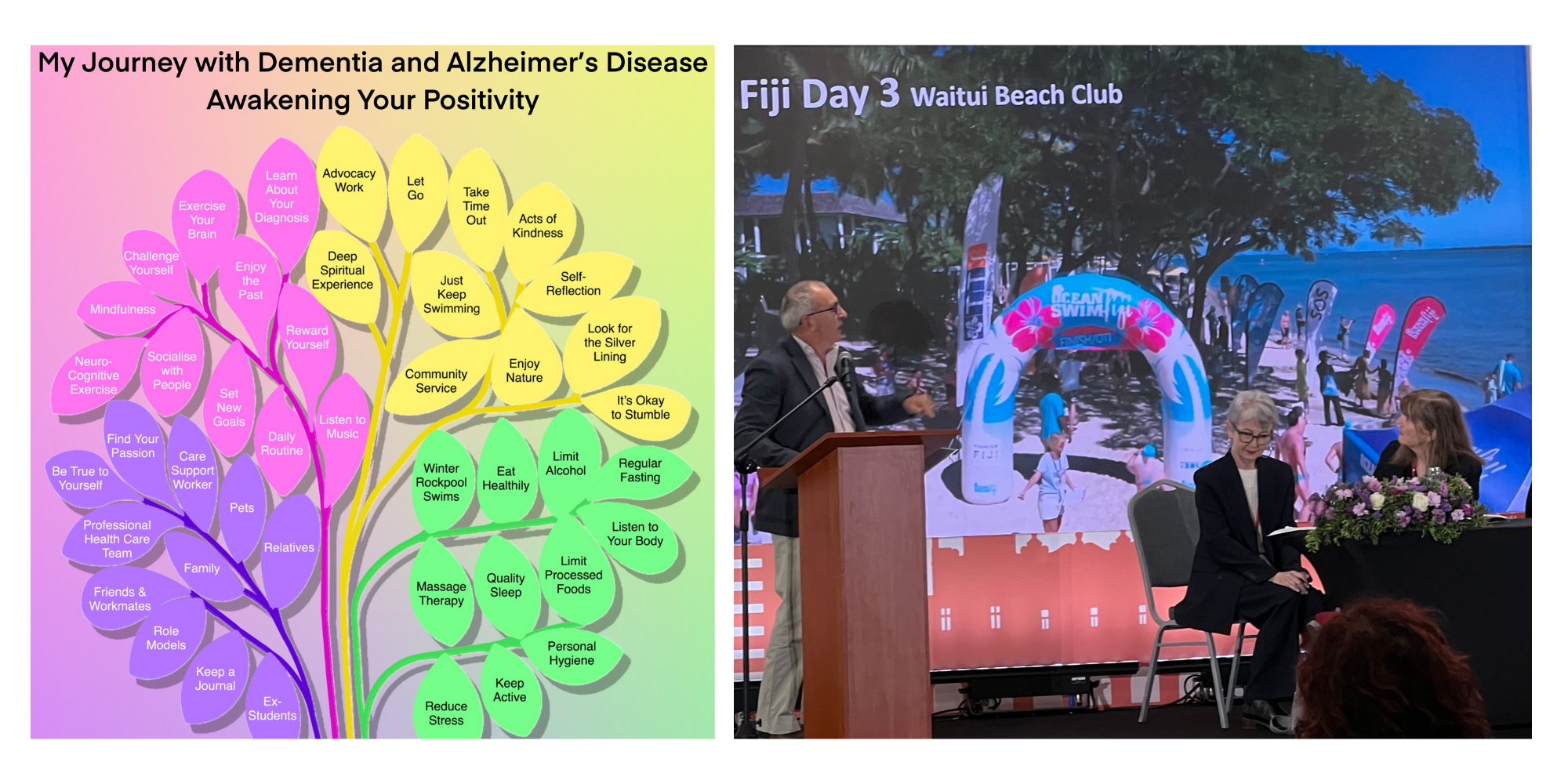
Source: BYeates 1) My Tree of Awakening your Positivity 2) Bill presenting at ADI 2024
How did you begin to overcome the shock of your dementia diagnosis and begin to remove some of what you described as the ‘doom and gloom’ that surrounded you?
I didn’t initially cope well with my diagnosis. I refer to it as a period of darkness, where socially I retreated. I felt sorry for myself, and I ate and drank too much. After I received my diagnosis, my darkness came from the fact that all my dreams and my aspirations, what I wanted to achieve for the rest of my life were taken away from me.
Thankfully, I had a group of friends who said to me "Why don't you come to Japan to support the Wallabies in the 2019 Rugby World Cup?" I had decided the trip was my last hurrah, but I ended up having such a fantastic time that I realized that I was the one allowing the darkness to surround me. I needed to change.
I came to the realization that, okay, it's a progressive, it's an incurable disease, accept it, and then move on with your life, and that sort of initiated me coming back to life.
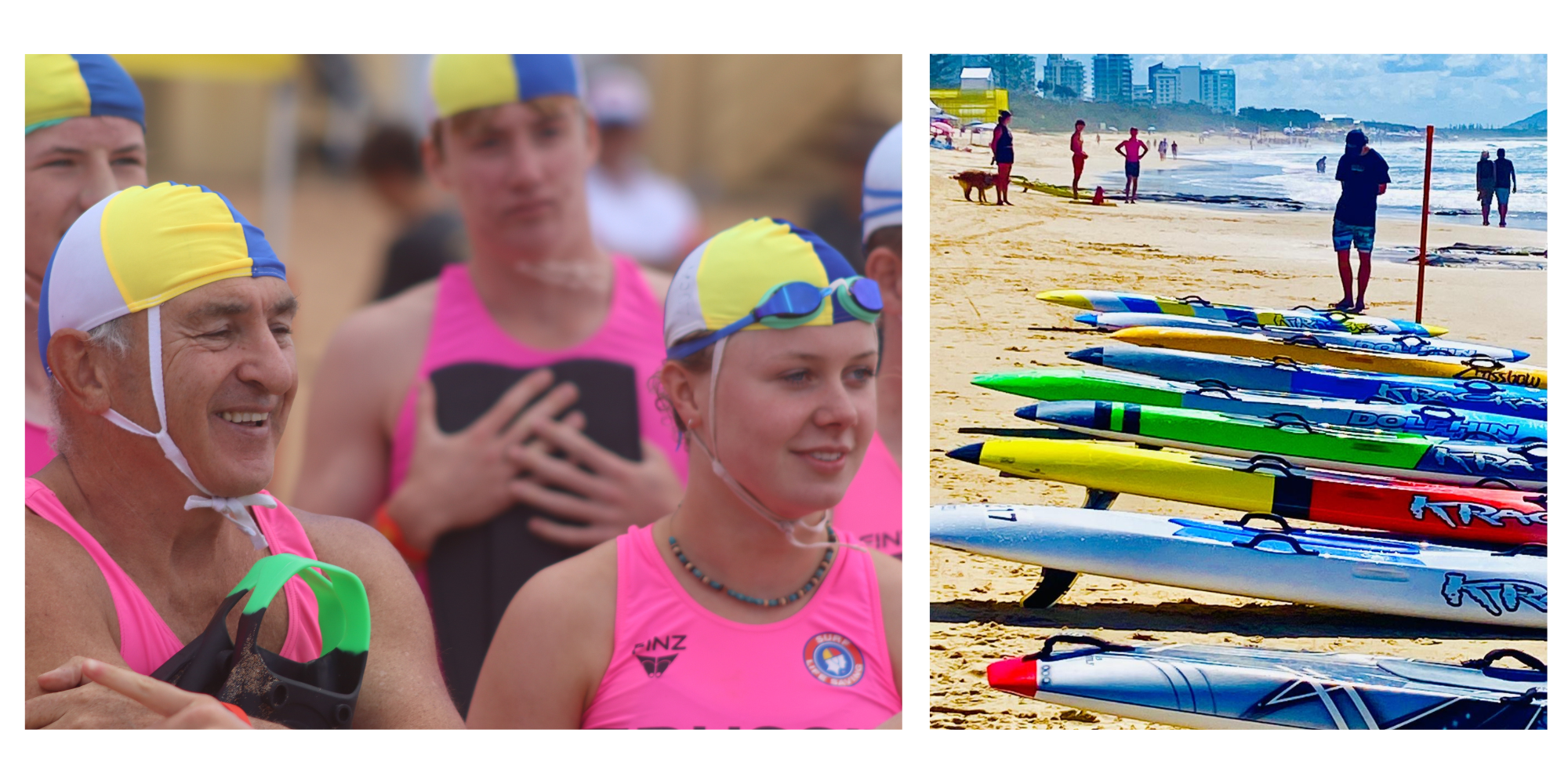
Source: BYeates 1) Champion Lifesavers 2) Racing Mals Sunshine Beach, QLD
What did people around you do that was helpful during this time?
I was very, very lucky in the sense that I have a twin brother and a core group of friends who stood by me to support Nicole, my wife and myself. And that was really, really important.
There were friends who just found excuses not to catch up with me. Now I realise that a lot of it had to do with the friends not knowing how to talk to me, how to engage with me. It's a sad factor associated with this disease. Over the years, since I've been doing so much work as an advocate, friends who walked away have come back into my life.
One of the highlights of my life was when three of my close friends got together and decided that we would raise the awareness of dementia in our local community. We have 14 iconic rock pools in our northern beaches, near where I live in Sydney, Australia, within a 19 kilometer stretch of coastline. Each year we invite people to a swim rock pool tour as a fundraiser and together we have raised ninety five grand over the past three years. We’ve donated all the funds to organizations in our area supporting mental health and wellbeing. So that's the type of thing that I mean - friends willingly give up their time to support me has been incredibly helpful.
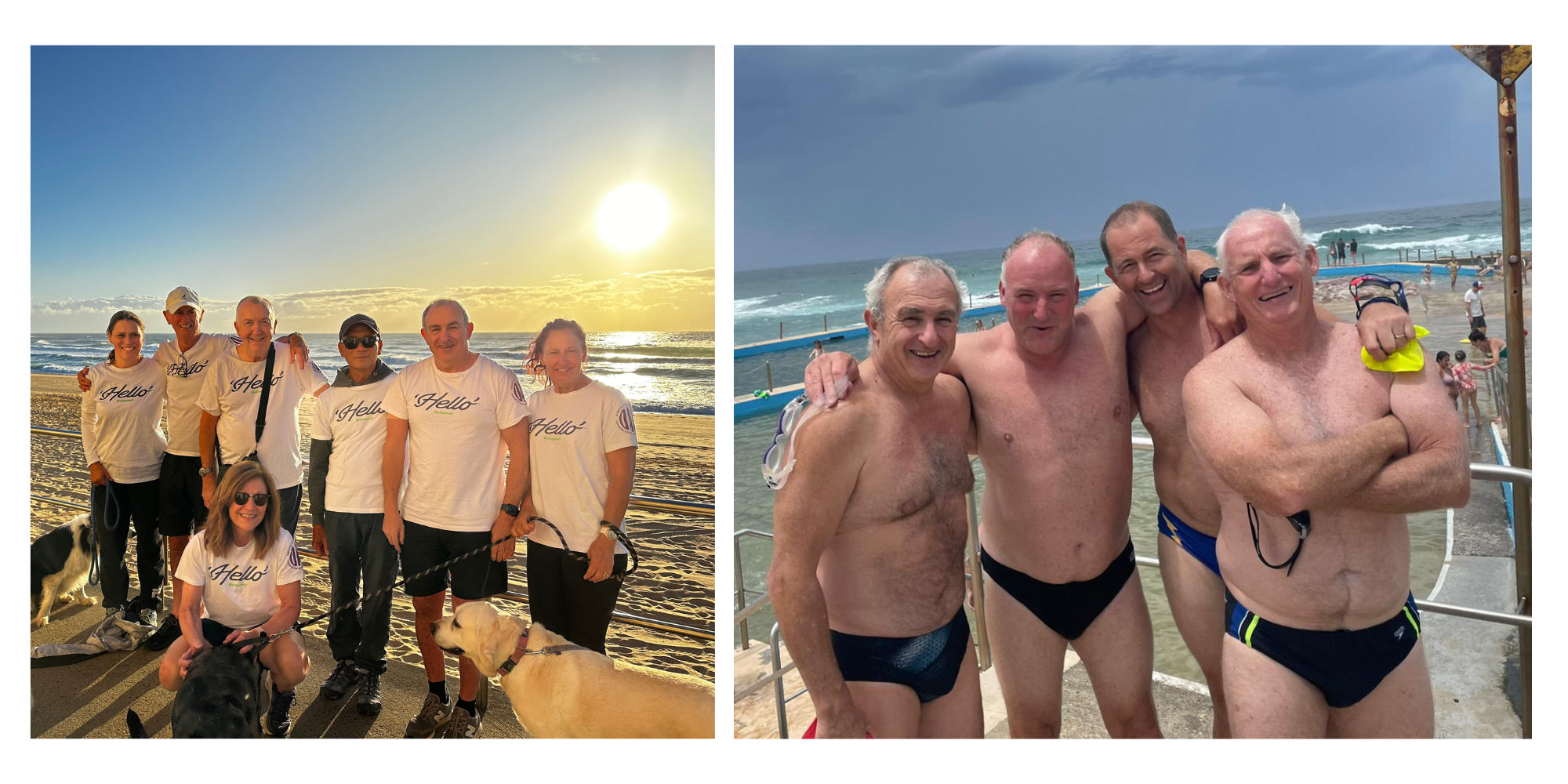
Source: BYeates 1) South Curl Curl 2) Ocean Rockpool Tour
How did you come to develop your approach to living well with dementia – that you call the Tree of Awakening your Positivity?
When I came back from Japan, I decided to fight this disease. I had to accept the diagnosis, but there's always a glimmer of hope somewhere. I realized I needed to come up with a plan to live my life. I chose to change my thinking to try to rebuild myself and rediscover who I now wanted to be.
My first glimmer of hope was to enroll myself in a clinical trial. I saw my diagnosis as being associated with an anti-inflammatory response. I saw it as there must be some inflammation, stress-induced, diet-induced, or whatever, a whole range of things which had caused the amyloid beta deposits to buildup in my brain. I found a clinical trial in Sydney where I matched the inclusion criteria and I thought - that's what I've got to do.
The second thing was I looked and looked to find a post-diagnostic care and support program. I couldn't find anything. I had learned that with younger onset Alzheimer's disease can progress quite quickly so there is a finite amount of time to intervene. Even with a diagnosis, the risk factors for dementia should also be on your radar as they can help to slow down this disease.
I needed something structured to incorporate changes into my own life, with the hope I will be able to retain my independence longer thereby improving my quality of life as this disease progresses.
– Bill Yeates
I believe it might be possible to change the expected trajectory of a disease such as Alzheimer’s by adopting a comprehensive person-centred, holistic approach into your daily life. Over the past three and half years, I’ve developed my Tree of Awakening your Positivity to manage my diagnosis on a daily basis.
I needed something structured to incorporate changes into my own life, with the hope I will be able to retain my independence longer thereby improving my quality of life as this disease progresses. In doing so, I am able to exert a measure of control over my own life by living a life that I want to.
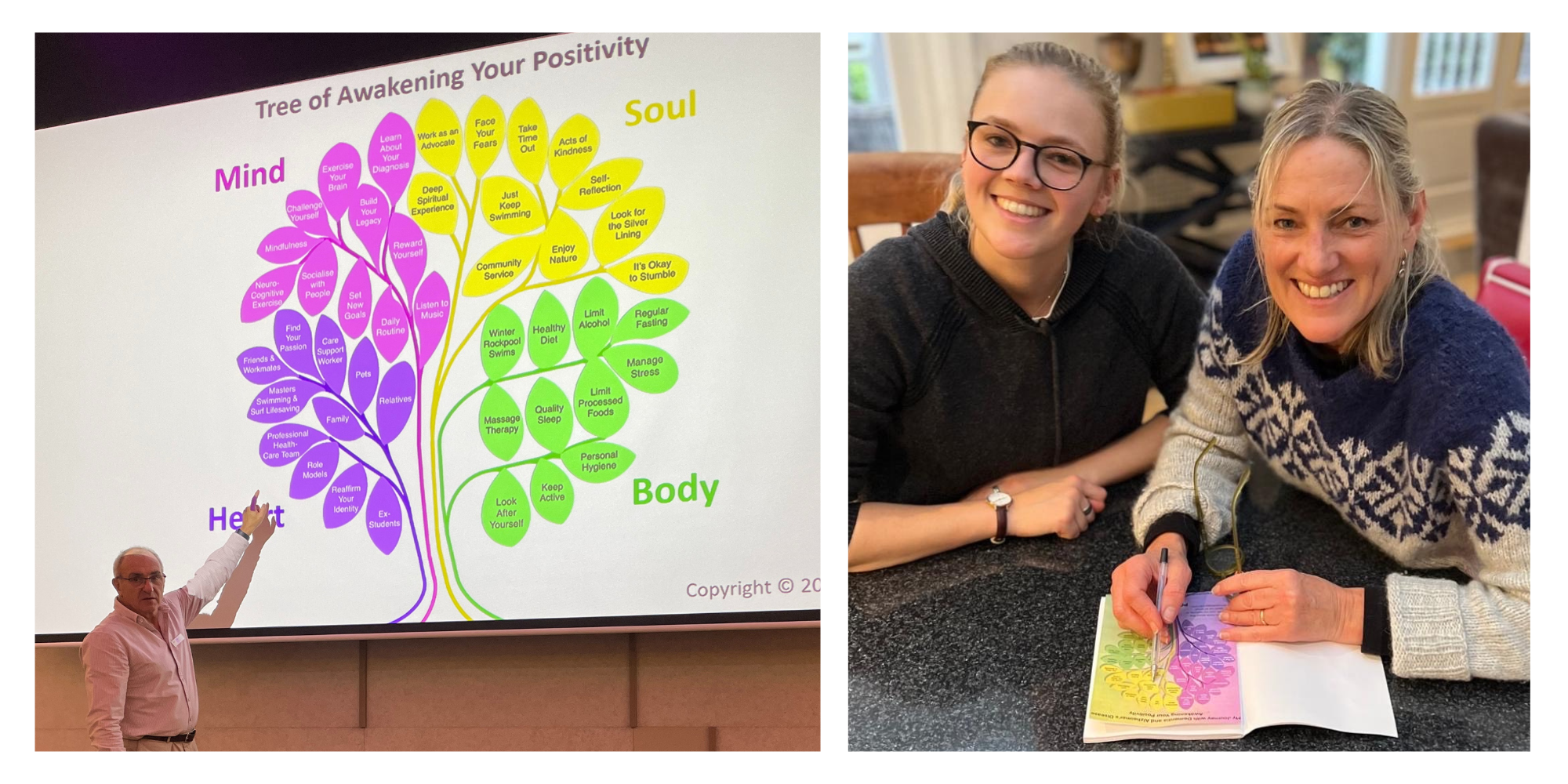
Source: BYeates 1) HammondCare 2024 2) Brooke helping mum Alison to create her own Tree
From my experience, each of the four aspects of self (body, heart, mind, and soul) are interconnected and exert a synergetic relationship with each other. I believe, it is only when the four aspects are nourished by their own individual leaves (Leaves of Positivity) that you can reset your body to create a balanced harmonious environment that will help you manage and fight this disease as it progresses.
In most cases, the ‘Leaves of Positivity’ that I have chosen in my tree are representative of a range of actions, strategies and interventions that I have assigned to each of the four aspects. Whenever I have encountered difficulties and thoughts of giving up have surfaced, the advice from a past student, Alison, echoes in my mind – ‘Just keep swimming’. For me this is the most important leaf in my tree.
Until a cure is discovered the endpoint of the disease will still be the same but at least you can have the possibility of extending your life expectancy and living a better quality of life.
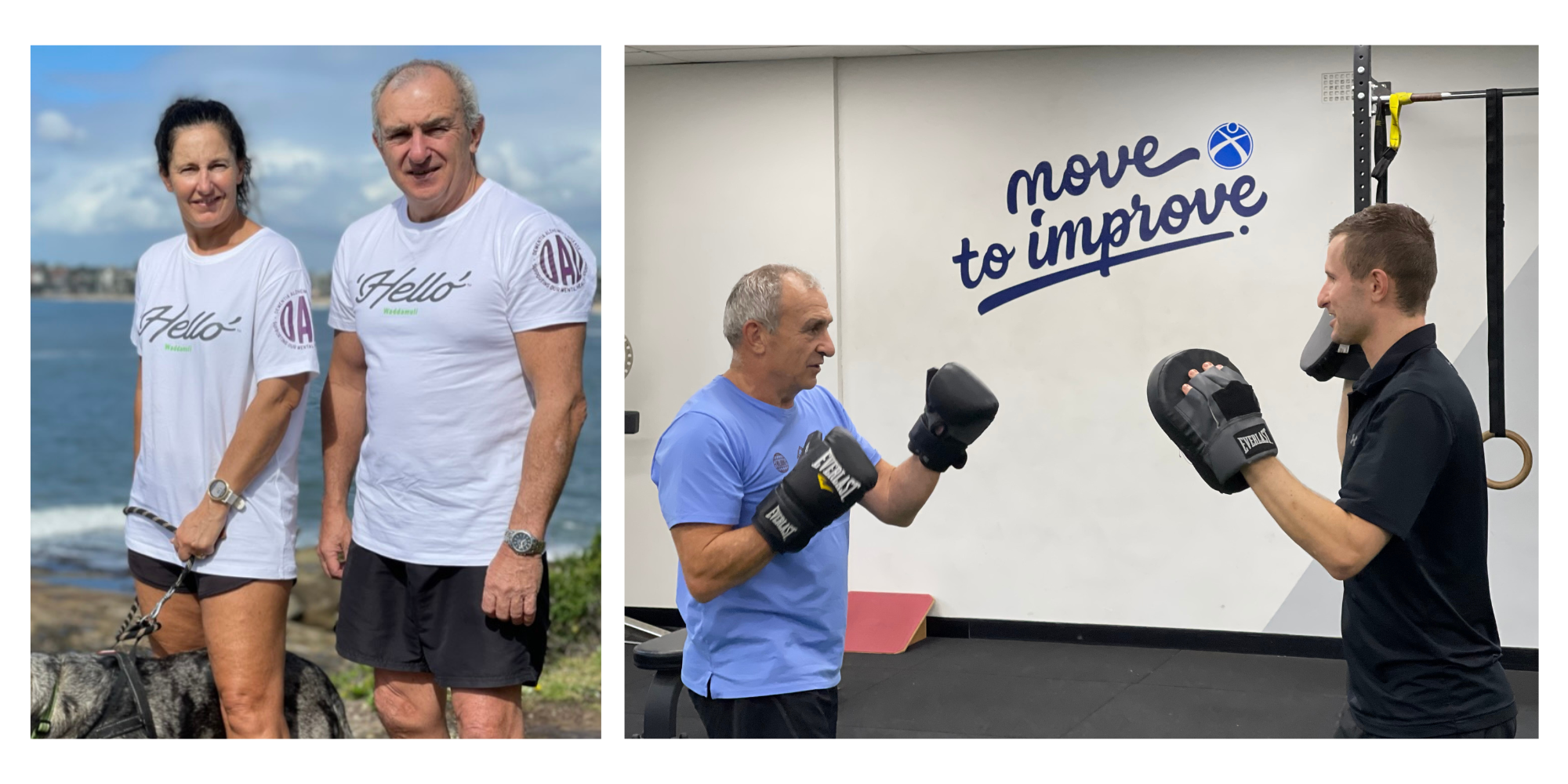
Source: BYeates 1) with Daniela (care support person) 2) training with Luke from Empower Physiology
I think the important thing in breaking that stigma down is to understand that people with a disability have a right to enjoy life and have a right to become involved in their local community.
– Bill Yeates
How can we end the stigma that often surrounds a diagnosis of dementia?
For me, it's having role models and being a role model to try and break stigma down.
When I compete in masters events I don’t have a problem informing everyone that I have Alzheimer's. This way, people can see a person living with dementia normally. Now, people often come up to me saying, "You've shown me a completely different side to what it means like living with dementia." You’ve got to be able to balance up the dark side of it.
Getting out and socializing with people, having fun with people, competing with people has worked well for me. I think the important thing in breaking that stigma down is to understand that people with a disability have a right to enjoy life and have a right to become involved in their local community. 
GET MORE INFORMATION
Learn more at Bill’s website – Awakening Your Positivity
Read more about living with dementia in our Live Well article archive
SHARE THIS ON SOCIAL MEDIA