Uncertainty, Hope and Life After a Dementia Diagnosis
Acceptance did not make the fear of dementia disappear, it simply taught me how to live alongside it.

This article was written by a guest contributor, and the views, thoughts and opinions expressed in this article belong solely to the author.
On 14 August 2026, it will be seven years since I sat beside my wife Nicole in the geriatrician's office and heard the words that would change my life forever:
"You have Young Onset Alzheimer's dementia."
Sometimes it feels as though that conversation only happened yesterday. At other times it feels like it was another lifetime. That moment divided my life into two chapters, my life before the diagnosis and my life after. Since that day, dementia has reshaped every aspect of my life. It has challenged how I see myself, how I relate to others, and how I navigate the world around me.
Like many people, my first response wasn’t just shock. It was a mixture of fear, anger and sadness as I began to mourn the person I had always been. I desperately wanted my old life back - the teacher, the Deputy Principal, the husband and father who had always planned for the future with confidence and a willingness to move ahead in life with his family.
Almost overnight, my life became filled with an array of unanswered questions which brought a lot of uncertainty into my life. I didn’t know how quickly my condition would progress, what kind of life I would have, how it would affect my family, what support would be available or even who would continue to walk alongside me on this journey.

Photos courtesy Bill Yeates. Left - Bill with his wife Nicole, Centre - with daughter Caitlin, Right - Bill's son Liam with his wife, Krysta.
Over time I learnt something that I never expected. While I couldn’t change my diagnosis, I could change how I chose to live with it. The moment I accepted that dementia was now part of my life, rather than spending every day at home feeling sorry for myself, was the moment I began to heal emotionally. Acceptance did not mean giving up. It meant redirecting my energy towards the things I could still control - my health, my family and relationships. This was also around the time I found the power of advocacy, and with it a reason to keep pushing forward. I was determined to keep living an active life. One that I enjoyed, one that had meaning and purpose for me.
Yet, if I am completely honest, acceptance did not make the fear disappear. It simply taught me how to live alongside it.
Living with hope and uncertainty
Six months after receiving my diagnosis, I was fortunate to be accepted into a novel clinical trial that was investigating the neuroinflammatory hypothesis, using an experimental drug called XPro1595. As part of the Phase 1b trial, I received weekly injections for a period of fifteen months before being granted access to the experimental treatment for a further three years through Australia's ‘Special Access Scheme’. In total, I have received this experimental treatment for just over four years.
From the very beginning, I believed that if we are ever going to find more effective treatments – or dare I say a cure – for Alzheimer’s disease, it will be through research and the willingness of people living with dementia to participate in clinical trials. Taking part was never just about me. It was also about being part of something much bigger than myself and helping create a future where others living with dementia might have access to better treatment options than are currently available today.
Participating in research also came with an emotional cost. I had no way of measuring whether it was going to be beneficial to me or simply giving me false hope for a future that might never exist.
– Bill Yeates
I also had my own hopes. I hoped that the treatment might slow the progression of my condition. I hoped it would allow me to remain independent for longer and continue living an active life. Above all, I hoped it would give me the opportunity to be around as my children built their own lives.
But participating in research also came with an emotional cost.
Yet, if I am completely honest, acceptance did not make the fear disappear. It simply taught me how to live alongside it.
During the three years that I received XPro 1595, I never really knew whether this experimental drug was helping me. Unlike most clinical trials, there was no regular imaging or detailed testing which would give me insights into what was happening inside my brain. My GP monitored my general health and reported any side effects to the pharmaceutical company, but beyond that I was left largely on my own. Even though a nurse administrated the experimental drug, each week into my abdomen. I had no way of knowing whether this treatment was slowing down the progress of my condition, making no difference at all, or perhaps doing something that neither I nor the researchers yet understood.
That uncertainty gradually became one of the most difficult parts of my journey with dementia. There were times I found myself wondering whether I had become little more than a guinea pig. I had committed myself to a treatment regime that required considerable dedication, yet I had no way of measuring whether it was going to be beneficial to me or simply giving me false hope for a future that might never exist.
On reflection, I realize that hope and uncertainty have become my constant companions. I needed hope to keep moving forward with my life, yet uncertainty was always there, reminding me that the answers I sought remained hidden somewhere hidden inside my brain.

Photos courtesy Bill Yeates. Left - at the gym, Right - Amyloid PET July 2026.
Living from injection to injection
Sometimes I’m asked what life was like during the four years that I received weekly injections of this experimental drug. The simplest answer is that I lived from one injection to the next.
They became part of my weekly routine, a constant reminder that I was living with a progressive neurological disease. Also, a source of hope is that these injections might be slowing down its progression. Because the medication had to remain refrigerated (below 8oC), travelling overseas or interstate required careful planning. I couldn't simply pack the experimental drug into my suitcase and leave. Every overseas conference that I attended, every master’s competition that I competed in, every holiday that I went on, and every speaking engagement I had lined up, needed to be carefully planned around my treatment schedule.
The most significant side effect I experienced was severe bradycardia as my heart rate would constantly drop below 40 while I was resting. Thirty-three was the lowest it reached. As a master’s competitor, I always had to train early in the morning before an event, to ensure that my heart rate was high enough to compete. Recently, my cardiologist has told me that a pacemaker may be necessary if my heart rate doesn’t return to a normal rhythm.
Looking from the outside, people probably assumed that life had returned to normal for me. However, the reality for me was very different. Quite simply, I understood that I was living a life on borrowed time, and where the injections gave me hope for a better future, I also realised that things could change at a moment’s notice.
For quite a few years, this became my reality. It was built on routine, hope and a quiet confidence that the experimental treatment might be helping me.
One of the challenges of living with dementia is that even small things can take on enormous significance. A forgotten word, misplacing my mobile phone, a moment of confusion or an unusual experience suddenly becomes a question that starts to kick around in your mind.
– Bill Yeates
When doubt began to creep in
Towards the end of 2024 I began noticing small changes that made me question whether the experimental treatment was still working. Some days I felt I was doing quite well. Other days I noticed changes in my sense of smell and taste. I also experienced unusual visual perceptions, such as seeing what looked like puddles of water reflected across the polished floorboards in my home. Looking back, I have often wondered what those experiences really meant. At the time, I had been reading extensively about the symptoms of dementia, and in hindsight, I sometimes question whether I had unknowingly begun interpreting these experiences through the lens of my diagnosis. Perhaps some of what I noticed reflected changes in my condition. Perhaps some reflected the heightened awareness that so often accompanies living with an incurable disease such as Alzheimer’s. The truth is I simply don’t know.
One of the challenges of living with dementia is that even small things can take on enormous significance. A forgotten word, misplacing my mobile phone, a moment of confusion or an unusual experience suddenly becomes a question that starts to kick around in your mind.
Is this normal?
Is my dementia progressing?
Has the experimental drug stopped working?
These questions stayed in my mind for days and even weeks, they eroded my self-confidence, making it difficult to know what to believe. As the months passed, I found myself becoming increasingly hypervigilant, constantly monitoring my own thoughts, behaviours and physical health for any signs that things were changing for the worst.
Eventually, after speaking with my geriatrician and through personal reflection, I decided that, given my growing concern about possible side effects, the experimental treatment was probably no longer providing the benefit that I had hoped for. I then made the difficult decision to stop taking XPro 1595 at the end of July 2025.
As I came to believe that my dementia was progressing and therefore time was becoming a limiting factor in my life, there was a subtle shift in how I was perceiving the world around me. I now became determined to achieve all of the goals that I had initially set for myself.
As a result, I didn’t stop and think about how my choices would impact those closest to me. There were comments that I should have kept to myself. For this I am genuinely sorry to anyone that I may have offended.
Before I had the opportunity to carry out this decision, an unexpected email arrived on 8 July 2025. Following disappointing Phase 2 clinical trial results, the company announced that access to my experimental treatment would cease on 27 July 2025 and any remaining medication would then need to be destroyed.
As the decision to discontinue the experimental treatment had been taken out of my hands, it affected me more deeply than I had expected. For the first time since receiving my diagnosis, I found myself confronted with my own mortality in a way that I had managed to avoid for so many years.

Photo courtesy Bill Yeates. Tau PET Scan September 2026.
What is Scanxiety?
Scanxiety, is a well-known term that describes the emotional journey that exists between having a scan and receiving the results of that scan. Although rarely spoken about in the area of dementia, I have found that my scanxiety started from the day that I decided that I would have another Amyloid PET scan to determine what changes were occurring in my brain.
From that moment on, each passing day has brought with it a series of unanswered questions.
Has the amyloid continued to spread throughout my brain?
Has the experimental drug changed the progression of my condition?
What happens if the experimental drug has made no difference at all?
Or could something completely unexpected have happened?
Living with those unanswered questions has become one of the most emotionally challenging parts of my journey with dementia. Recently this has reached a peak as the date for my repeat Amyloid PET scan (24 July 2026) was drawing closer and closer. I started to notice a number of subtle changes starting to occur in my body. These included struggling to fall asleep at night, finding it harder to concentrate and my mood becoming more unpredictable. Even my usual enthusiasm for swimming training and working out in the gym has started to fade.
Despite my best efforts to keep my life as normal as possible by continuing to follow a regular routine, the same unanswered question has kept returning to my thoughts:
What is happening inside my brain?
Over the past year, I have explored every possible scenario hundreds of times in my own mind. Although it is extremely likely that the amyloid has continued to spread throughout my brain, (I have tried to prepare myself emotionally for that possibility) while still remaining open to other possibilities.
What happens if the scan shows that the amyloid load in my brain has increased, remained stable or there has been a reduction?
Why I waited almost a year
Many people have asked why I have waited nearly twelve months after stopping treatment before having another Amyloid PET scan.
The answer is simple.
I wanted to give my brain every possible opportunity to show whether the experimental treatment that I had been receiving for just over 4 years has produced a lasting biological effect. Although XPro 1595 has no biological mechanism designed to remove amyloid deposits from the brain. It does, target neuroinflammation. This is the chronic inflammation within the brain that is increasingly being recognised as an important contributor to Alzheimer’s disease. This has left me wondering whether something unforeseen might be occurring in my brain;
Could the drug have somehow reset my immune system?
Could the drug have improved the brain's ability to remove amyloid?
Or has the disease simply continued to progress exactly as expected?
Following my meeting on 1 August 2026 with Professor Michael Woodward to review the results of my scan, I will finally have an answer to this question.
What changes have occurred in my brain as a result of taking XPro 1595?
Receiving the results
If I thought my experience of scanxiety had been difficult leading up to my Amyloid PET scan, nothing could have prepared me for what followed.
Although the Amyloid PET scan was performed on Friday 24 July 2026, I had to wait another six days before I had the opportunity to discuss the results with my general practitioner (GP). As my geriatrician was retiring at the end of July, I had arranged for a copy of the results of the Amyloid PET scan to be sent to my GP.
Those six days felt even longer than the weeks and months leading to the scan.
Once again, my mind replayed every possible outcome. I imagined the best-case scenario, prepared myself for the worst and tried to convince myself that whatever the result, I would somehow find a way forward.
Sleep became difficult. I doubt I managed my usual eight hours on any of those nights. Even though life continued around me, part of my mind was already sitting in my GP's consulting room, waiting to hear words that I hoped would change my future.
On Thursday 30 July 2026, that day finally arrived.
Sadly, the results were nothing like I had hoped.
Far from showing stability or improvement that I had hoped for, my scan demonstrated that my amyloid burden had continued to increase. Areas of my brain that had previously shown only minor amyloid binding were now ‘highly positive’ for amyloid plaques. Even more confronting was learning that two areas of my brain, frontal cortex and striatum, regions of my brain that had shown no amyloid binding in my previous scan, were now ‘highly positive’. My Centiloid quantitation result was 102 CL.
From my perspective, this was a very long way from the result I had spent the previous year hoping for.
I left the appointment feeling empty and completely devastated.
For the first time in many years, I could feel the darkness beginning to return.
All the questions I thought the scan would answer suddenly gave way to a single different question.
"What happens now?"
Over the next few days, I struggled emotionally. By the time I travelled to Melbourne to meet with Professor Michael Woodward to review my results on 1 August 2026, I knew my mindset was not in a good place. My wife sensed this too and asked whether I wanted her to attend with me. I said no as I didn’t want Nicole to cancel the evening she had planned with our daughter.
When I walked into Professor Michael Woodward's consulting room, I expected confirmation that my worst fears had become reality.
Instead, I left with something I hadn't anticipated.
Hope.
Professor Woodward was very clear that I have Alzheimer's disease, and the scan confirmed that the amyloid pathology had progressed. Yet he also reminded me that an Amyloid PET scan is only one part of the story.
After reviewing my clinical history, he explained that several key factors may have contributed to slowing the progression of my cognitive decline over the past seven years. These included my participation in the clinical trial, for more than four years of treatment with XPro1595, my commitment to a range lifestyle changes and psychosocial interventions through my Tree of Awakening Your Positivity, and my ongoing use of a medical nutrition drink, Souvenaid.
Over the years, I have come to realise that being a ‘survivor’ is not so much about overcoming dementia as I once thought. Perhaps it is more about refusing to let dementia define who you are and continuing to live an active life that you can enjoy. One filled with purpose and meaning.
– Bill Yeates
What survival means to me
People sometimes ask whether I consider myself a ‘survivor’, but I'm not sure that word feels right.
When I was first diagnosed with Young Onset Alzheimer’s Disease in August 2019, I held onto an extraordinary dream, that I rarely talk about. I wanted to become the first survivor of Alzheimer’s Disease. At that time, survival meant finding a treatment that would cure this progressive disease.
Over the years, I have come to realise that being a ‘survivor’ is not so much about overcoming dementia as I once thought. Perhaps it is more about refusing to let dementia define who you are and continuing to live an active life that you can enjoy. One filled with purpose and meaning.

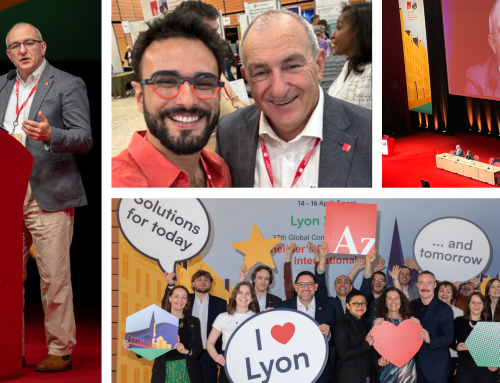
Photos courtesy Bill Yeates. Presenting at the Alzheimer's Disease International Conference 2026, Lyon, France.
My advice
My journey with dementia has taught me that hoping for a better future is not about pretending that fear doesn't exist, escaping the uncertainty that comes with a diagnosis of dementia, or avoiding the difficult days. It is about continuing to move forward with your life, even if that means taking just one small step at a time. It is about finding the resilience to keep going and believing that life can still hold meaning, purpose and hope, despite the obstacles that stand before you.
The future remains uncertain - it always has - but one thing has never changed. I will continue to believe. I will continue to fight. I will continue to have hope.
– Bill Yeates
When I left Professor Michael Woodward's office, I wasn't carrying the news I had hoped to hear, but I was carrying something just as important - I had a renewed sense of direction. For the first time since receiving my scan results, I realised that hope is something we can often miss. Sometimes, we just need to open our eyes, in order to see it. I will remain forever indebted to Professor Michael Woodward for teaching me this very important lesson.
The timing of that realisation could not have been more perfect. While waiting at Melbourne airport, for my flight home, I was scrolling through Instagram, when I came across a contestant on America's Got Talent singing ‘Don't Stop Believing, hold onto that feeling'. The words resonated deeply with me because they reflected exactly where I now found myself. Although my scan hasn’t delivered the outcome I had hoped for, I realised that I still had every reason to believe in the future, and more importantly to believe in myself that I could still move my life forward.
That is why one of the most important leaves on my Tree of Awakening Your Positivity continues to be the advice I received years ago from one of my former students, Alison. She simply said, "Just keep swimming." For me, those three words have become far more than a phrase. They have become a way of life - a mindset that has underpinned everything I have achieved and hope to achieve since receiving my diagnosis.

Photo courtesy Bill Yeates. Bill, with Tayia, Peter and Simon at Perth Winery 2026.
Seven years ago, I received a diagnosis that changed my life forever. Today, despite disappointing scan results, I remain just as committed to living a life filled with purpose, contributing to research and helping others navigate their own journey with dementia. The future remains uncertain - it always has - but one thing has never changed. I will continue to believe. I will continue to fight. I will continue to have hope.
Perhaps this is the greatest lesson dementia has taught me. We cannot always choose what happens to us, but we can choose how we respond. I choose to keep living. I choose to keep hoping.
And, no matter what lies ahead, I choose to Just Keep Swimming.
GET MORE INFORMATION
More articles by Bill
- Just Keep Swimming Q&A with adventurer and advocate Bill Yeates.
- Awakening Your Positivity. Expert advice on rebuilding your life after a dementia diagnosis.
- Leading with Lived Experience. Dementia changes your life, but it doesn’t take away your ability to contribute.
ABOUT THE AUTHOR
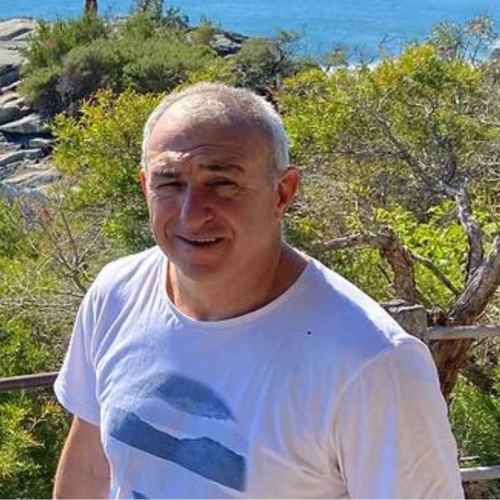
Bill Yeates taught chemistry, physics, and mathematics in Australia for 35 years, before experiencing a ‘depressive episode’ that eventually led to a diagnosis of young onset Alzheimer’s disease in 2019 at age 59.
With the support of his wife, Nicole, their children and Peter, his twin brother, Bill has created a dynamic and engaging post-diagnosis life as a masters competitor in swimming and surf lifesaving, fin-swimming, champion lifesaver coach, community fundraiser, and dementia advocate.
Bill informs and inspires others around the globe to create positive change for people living with dementia through presentations and media appearances. He’s also a living testament to the power of positivity and actively challenges the narrative of the dementia journey as one only of progressive decline. Forever a teacher, Bill has created a person centred, holistic approach to nourishing his body, heart, mind, and soul that helps him manage symptoms and maintain his independence.
He currently lectures at the University of Sydney and University of West London, and works as a Living Experience Associate Consultant with HammondCare.
Connect with Bill through his website: Awakening Your Positivity
SHARE THIS ON SOCIAL MEDIA